Corsica – Reflections II


It’s taking a while for Corsica to settle into my subconscious.  Sort of like Thanksgiving dinner digesting over several hours as it settles.

There were a few things I learned about myself on this trip that were as important to me as all the research I did.  Perhaps even more important.

Limits were something I never thought about before.  Whatever I wanted to do, I did.  It never occurred to me I couldn’t do something.  Now, I’m old, and for the first time I realized there are things that might be beyond my capability.  Like climbing a mountain.

I learned I can walk for almost eight hours a day, and on dicey terrain.  There was a price to be paid the next day in pain: hips, back, a bit in the knees.  But I couldn’t climb to the top of a mountain.

My traveling buddy, Melinda, and I took off on what we thought, according to the guide book, was a thirty minute walk to visit a prehistoric site in the mountains.  A walk was specified.  We were dressed accordingly.  Melinda had on flat pumps from Clark’s; I had on a pair of slip-on sneaker type shoes.  We were bejeweled, decorative scarves flung jauntily around our necks, wore raincoats and handbags were slung across our chests.  I had a hat.  We didn’t have hiking boots, walking sticks for balance, ropes, pitons, water…whatever.

I parked the car where indicated and we, in our fractured French, asked two workmen where the Neolithic sites were.  They pointed over their shoulders.  An hour later we were still far from the top of the mountain.  The track went straight up over roughly carved boulders, washed out gullys, scrub roots pushing out of the soil in odd places.  It drizzled for a few minutes and then stopped.  My lovely looking and stylish raincoat that called to me enticingly in Marshalls turned out to be so polyester rich it was akin to wearing a plastic leaf bags.  When I took it off, the inside of the coat dripped water.

Melinda stopped to humor me.  I stopped to catch my breath and gain enough strength in my knees to continue.  And we did.  Up.  And up some more.  I turned to look back and nothing was recognizable below other than a sea of green bushes and shrubs.  We were way up there.  I looked up the track.  We were finally past mid mountain.  I sat down for a minute or two and wiped the sweat off my neck.  I could do this, couldn’t I?

The track continued up in a straight line.  Don’t these bloody Corsicans know about winding around the mountain to get to the top? 

Another twenty minutes and we were at the putative top.  There was a fairly level spot we traversed and then, damn, there was another peak.  Melinda took off and I was behind her, for a while.  Then I knew with a certainty.  I was not making it to the top.  We were really close, but it was not my Everest to conquer.  Melinda wanted to attempt the top.  I sat on a rock.  Off she went.  I contemplated the fact that I was old, less mobile than I had once been.  And I looked down.  Damn, I’d climbed a helluva distance!

Melinda was still up there and the sounds of her climbing stopped.  I took off my coat, hat, handbag and scarf, bright red, mind you, and piled them on a rock next to me.  The drizzle had given way to bright sun.  I rolled up my raincoat and hat, put them in the center of the large scarf with my handbag and rolled them all up into a neat package that looked like a red boa constrictor trying to digest a medium sized pig.  Then I slung the scarf over one shoulder with the pig part in the back and tied a knot in the center of my chest. A few shakes and adjustments and I was off to continue climbing without the hat causing sweat to run into my eyes, the raincoat cum plastic bag collecting water, and the handbag flapping against my hip or falling to the front to trip me when I bent over.

Fifteen minutes more of straight up, the track became narrower.  Melinda was nowhere in sight. And there it was in front of me.  A shear rock face.  The only way up was using both hands and feet to scale that pink rock.  It beckoned.  I quailed.  I sat and contemplated it.  The smell of the maquis was strong, the immortelle was drowning out the sweet jasmine. There was no way around.  And then I learned a second thing.  I learned fear.  What if I fell?  What if I broke my hip there on the mountain?  How on earth would I get down?  There was no one on the mountain other than Melinda and me.  The only people who knew we were there were the two workmen at the bottom.  They had probably already forgotten about the two crazy women with the bad English-accented French.

And then I made a plan.  I could do that very well.  If need be, I could rescue Melinda.  I would go down the mountain, hanging on to the brush and the stone wall meandering alongside the track.  It would take me a while and I would go very slow so as not to fall.  Every rock would be tested for balance so it wouldn’t pitch me over. I could find the local gendarmerie and have them send out a search party equipped with something to bring her down off the mountain if she was injured.  I knew I could rescue my friend if I had to, not by muscling her down on my back, but by brainpower and perseverance.  Those skills weren’t marred by old age and lack of mobility.

A little while later I heard scuffling sounds and small rocks falling down the track.  I yelled.  Melinda answered.  I breathed.  A few minutes later she appeared.  She had made it to the top of the mountain and was triumphant on her return with photos of the ancient village perched at the top of the crest.  It was all there on her camera – walls, entryways, room demarcations.  It had been waiting for her to capture it with modern digital media.  She knew I wanted the photos to write about and she didn’t want to let me down.  I was grateful and shared her joy in her conquest of the mountain.

On our slow and careful way down, I kept remembering my skiing days and the skier’s mantra “you always get hurt on the last run down the mountain.”  It’s the one where you say to yourself, this is my last run, it’s the end of the day and I’m going to quit after this one.  I had paid attention to the old lesson and quit while I was ahead.

As we reached the bottom of the mountain and wound our way through the backyards on the path to our car, I found thanks along the way.  I was thankful for doing Tai Chi three hours a week that allowed me to climb as far as I did.  I was thankful Melinda not only made it to the top but also that she came down safely. I thought for a moment I would have liked to see the village myself, but then I was thankful I had a good friend who had been able to see it, bring me back photos, and do it with no harm. But most of all I was thankful for being alive and able to do as much as I did.

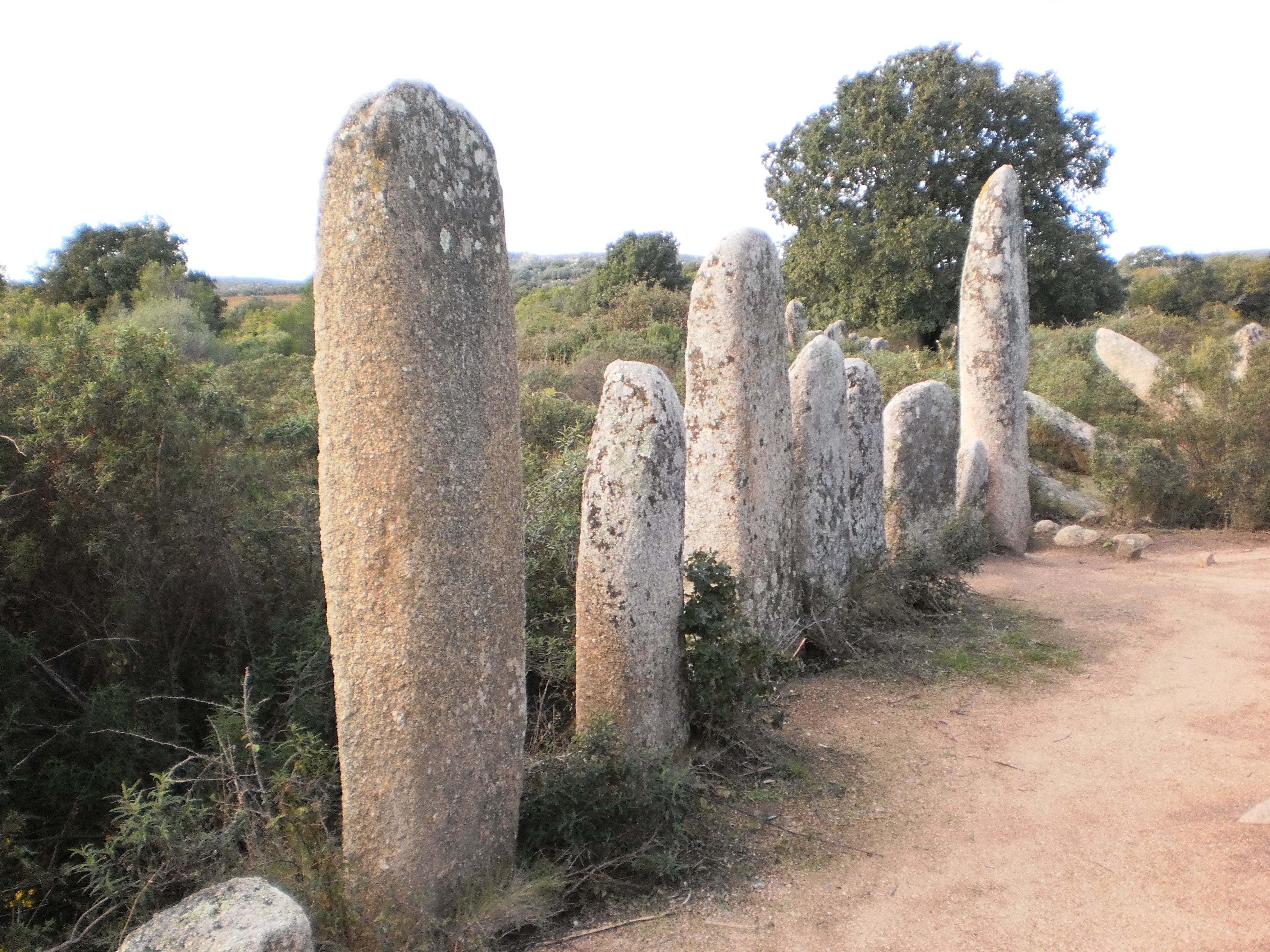
The next day we walked almost eight hard hours to see four different prehistoric sites.  The terrain was more or less level, especially considering the adventure of the day before.  What we saw was astounding, hundreds of the stantari of Corsica and one of the huge burial dolmens.  I put my hand on an 8000 year old carved figure and felt a shiver and a thrill.  We think of all the accomplishments of modern man, but will they survive 8000 years?

So I realized I was also thankful for never giving up, good genes, taking my vitamins and exercising regularly, quiting smoking, and all those myriad decisions I made in the course of my life that coalesced to permit me to touch this ancient man’s accomplishment.

Thank you Alice.
Corsica – Reflections

Corsica – Reflections


This is the first time I’ve sat down to write since I returned from Corsica.  The island is like that, it takes time to absorb all its beauty and mysteries.

I often think of the maquis.  It certainly represents Corsica.  My first reaction on driving through it was: “What’s that funny smell?”  Something just out of reach but with a definite musky quality, a hint of berries, perhaps a lemony touch, an under layer of honeysuckle or jasmine, and a soupçon of acrid eucalyptus – almost but not quite.  It’s indefinable. I thought that maquis was a certain plant and kept trying to identify it.  Turns out it’s an ecosystem of a whole area, rather like a savannah, or the plains. Some horticulturist, me.  My knowledge is limited to things like “tree,” “flower,” or “bush.”

The maquis is so representative of Corsica that Napoleon is reputed to have said when landing on Elba, “I can smell my home from here.”

After a bit of prodding and nudging, I found out the most representative and common plant of the maquis is the immortelle.  It’s very small yellow flowers are dried in bunches for decoration and the myriad of other uses it’s put to.  Oils distilled from its essence are reputed to have curative powers for everything from wrinkles to skin problems, bug bites, burns and most of the things we use the aloe plant for.  Honey from the maquis is very dark, strong and rich.  It bears the pungency of immortelle, and it’s a flavor that takes some getting used to.

Melinda, my travel mate, and I drove, windows wide open, through the maquis to get to and from St. Florent on a spectacular sunny day.  We wanted to inhale the goodness of the air – a bit of salt as we neared the sea, a sun-on-the-mountain-rocks scent, and overlying everything, the maquis.  We often stopped the car, got out and sniffed the foliage.  Some places were sweet, others musky and then almost acidic.  Pine enters into the mix in some places.  Then there was a sweet overlay of something like jasmine Melinda said.  This morning I walked outside my door in Mexico and saw a vine that looked similar with tiny white flowers, impossibly small and fragile.  I sniffed it.  Nothing.  I realized I missed the maquis and was sad for a few moments.  Corsica does that to you.

The national flag of Corsica is white with a black Moors head adorned by a white bandanna.  Now the Corsicans aren’t Moorish and they aren’t black so it’s a bit odd.  There are several stories about how it was chosen.  They all include Moorish pirates and one even has a captured Corsican damsel spirited away by a dashing pirate who ends up beheaded for his trouble.  Another story is similar but no damsel.  Seems a captain of a band of Moorish pirates was going up and down the Corsican coast pillaging all the small villages, raping and capturing the women and making a through nuisance of themselves.  The Corsicans got together and made sure that when the pirates next landed they were greeted by a band of angry men and not just an undefended village.  The captain’s head ended up decorating the tip of a stake as a warning to all pirates that the Corsicans are not to be taken lightly.  It’s alleged to be his head on the flag.

Located between France and Italy,Corsica has always been a great hopping off point with beautiful harbors,  plenty of fresh water and sandy beaches.  The coast boasts a plain that slopes inland to high mountains, streams and lakes, and gentle valleys.  The mountains are inhospitable, granite in grey and oranges, steep and covered with prickly vegetation.  The island is an obvious prize for anyone who could grab it.  The first settlers of Corsica date back over ten thousand years.  Settlements and early man sites date back eight thousand years to stone villages and “casteddu” or walled settlements on top of the mountains.  The Phoenicians, Etruscans, Romans, Genoese, French, Venetians, British, Saracens and anyone else with a boat and a strong desire have tried to take over the island.  Nelson lost an eye in a battle for Corsica.  He was lucky it wasn’t the rest of his head with the way the Corsicans fight.

The French own the island now.  The Corsicans are not at all pleased with them.  Since being part of France, the Corsican separatist movement has never stopped.  There is a mystical Corsican Brotherhood that is part religious, part political and works behind the guise of the Catholic Church to attain freedom.  The FLNC is the overt political movement and its signs are everywhere.  As a nod to Corsican culture, road and street signs, village names, directions, are in French on the top of the sign and Corsican on the bottom.  The top references are then spray-painted or crossed out, frequently shot out, leaving the Corsican designation to remain.  Corsican’s don’t give up easily.  They keep their language within the families, and in the small towns.  Grudgingly, they all speak French too.

So, the way I see it, the Moor’s head is a great symbol for Corsica.  It certainly says loud and clear, “Don’t fuck with Corsica!”

As Americans, we were very nicely treated by everyone we met.  We later found out that of the hundred and fifty thousand annual tourists that visit each year, only about six thousand are Americans.  It was obvious we spoke accented French and were immediately asked if we were English.  My white hair and blue eyes are a dead give-away.  When we said we were Americans from California, the locals were very interested and wanted to know right away how Obama was doing.  We were there just after the Congressional elections, and they asked if he was badly hurt by the results.  When I asked one of the questioners why the interest, he came up with the old saw, “When America has a cold, Europe sneezes.”  They all universally hated Bush and were relieved to have Obama in office.

In a way, the interest in America was surprising.  Corsica is a small island, only about one hundred and fifty miles long by fifty miles wide.  Families are the most important part of the Corsican culture, and the closeness of families is a value.  It’s hard to get too far away in an area that small.  Tiny villages cling precariously to the mountainsides.  The streets are narrow and are two way with no possibility of having two cars side by side, so someone has to give way.  Every journey up a mountain is a heart pounder in a small stick shift auto.  Sometimes I was climbing in first gear and praying the car could make it.  It wasn’t always a sure thing.  I guess if you really wanted to get away you could just move to the next mountain.

Sitting at a table in a small village overlooking the mountain range in front to the ocean on the side is a truly spiritual experience.  You realize that the fog wreathing the shoulders of the mountain is actually fog, not smog.  It’s white.  There is nothing to pollute the air.  You can see for miles when the sun has burned off the morning fog.  As you inhale, your lungs thank you.  This is what it was like to breathe hundreds, perhaps thousands of years ago.  No wonder the people of Corsica are so engaged with keeping their island pure.  They have enough civilization.  There is satellite television, high speed internet and cell phones everywhere.  They don’t need high rise buildings crowding the beaches and holiday camps filling up the maquis with hikers.

One of the places in the world where evidence of Early Man is everywhere, Corsica is an island of menhirs and dolmens.  Dolmens are large constructions made of several very large stones put together in the form of a building, thought to be used originally as ossuaries or bone vaults.  The menhirs are carved stones  representing gods, soldiers, protectors – no one knows.  Their purpose is lost in time.  Called “stantari” on the island, they are in alignments, all facing the same directions, no matter where located.  Archeologists study them, but have no real idea of their purpose.  Perhaps the menhirs might be protection because some of them bear representations of arms.  I think Melinda has the right idea.  She noted they were carved and placed in their lines at a time when man was occupied with survival. How to feed themselves and their families was their prime concern.  She was astounded by the passion and time required to take these people from their fight to survive to make these arrays of figures, numbering in the thousands over the entire island.  It says something very telling about the Corsican spirit.

The stantari stand guard on the island as they have for thousands of years.  If you want to see the alignments you have to pay the price of trekking up mountains and through the maquis on heavily rutted dirt tracks.  We went after the rains and forded huge deep  puddles as well.

The stantari remain pure and sure in the respect accorded them.  No idiots dare to carve or spray paint their initials on the stout stone surfaces.  Lichen and fungus grow on the stones, but only the wind and rain have dared mar them.  Over the centuries, t he Corsicans have moved some of the stantari in front of churches, civil buildings and town squares Perhaps it is their warning not to push at the Corsican spirit too much.  The stantari are Corsican, and like the flag, represent the mentality of the island.

On To Ajaccio


November 11, 2010

We have finally made it to Ajaccio, our last stop in Corsica.  We’re at the Best Western and love the big room, all the nice amenities and excellent service – at the best rate so far!  We love American style hotels!!  That’s not to knock the other places we’ve stayed.  We spent three nights in Devil Village and enjoyed the big Labradors that slept in the entrance, the Corsican service and the big room.  It’s just different, that’s all.

We set off from Sartene this morning in sunshine.  It was tempting to try and go back to trek through the sites in Pianu di Levie but we kept remembering the ladies at the Museum warning us about people who slipped on the wet rocks and mud and decided we’d be pushing our luck.

It’s only 57 kilometers to Ajaccio from Sartene, but we spent the whole day getting there.  There is the nice auto route that takes about an hour and fifteen minutes.  Nahhhh.

We took the road less traveled and wound around every mountain between the two cities on the coast route.  That took us about eight hours including a lunch stop at Olmetto, a small village north of Propriano.  This was an event in and of itself.  I’d say more than 90 percent of the restaurants are closed, especially those in the resort areas near the beach.  This time we lucked out.  The restaurant was cheerful with its bright yellow paint, huge windows filled with sunshine, flowers everywhere.  It was filled, every table, and every spot in the parking lot.  That was a good sign.  We had a lovely lunch, expensive as everything is now for us poor Americans, but it was good.

Lunch was a consolation prize since we’d been disappointed at Filatosa.  We stopped to give one last try to get in.  Arriving there, a Jack Russell Terrier was very pleased to see us and lavish in his welcome.  That was it.  Two more cars pulled up, also trying to get in to see the stentari and other artifacts.  We explained  there was a telephone number to call and perhaps with eight people they’d let us in to have a look around.  One of the men pulled out his phone and tried, but no luck. We all left very disappointed.  It seemed to be a fabulous place to visit as we could see the stone figures when we hung over a fence.  It was so close to the entrance.  It would’ve been the only site not requiring a long trek to see.  Damn!

We patted the Jack Russell one more time and left.  Then we were on the hunt for an ancient ruined castle and a church filled with wonderful frescos.  Struck out again after spending hours winding around country roads and up and down mountains.  After going back and forth over the same road sometimes four times, we gave up.  We think we might have found one entrance, but the entrance was another muddy and rutted dirt road and we had no idea how far we’d have to take it.  It’s clear; to get to some of the sites you really need a 4-wheel drive with big wheels.  The little putt-putt we have was straining to get up most of the hills in first gear.  There’s no way to take it over the dirt roads with puddles who knows how deep.

So, when we saw an open restaurant there was no way to stop the car from pulling into the parking lot.  If a car could have its tongue out and panting, ours was.  It almost heaved a sigh of relief when I turned off the key.

After lunch, it was on the road again and up and down the mountains.  By the time we arrived in Ajaccio I was sick and tired of shifting and driving.  Thank you Best Western for giving us such a nice room.

Looking at my camera, I hardly took any photos today.  Same old mountains, same old ocean, same old rocks.  It’s funny; by now we’ve gotten into the swing of things, the rhythm of Corsica.  And just when it’s about time to leave.  Tomorrow we have the day to snoop around Ajaccio, re-pack our suitcases and relax a little bit before heading back to mainland France.  We’re taking the overnight Corsican Ferry Saturday night, arriving in Toulon Sunday AM and will drive towards Nice and spend the night someplace close to the airport.  We leave on Monday afternoon, spend the night in Madrid, then back to LAX.

We have probably been gone too long.  Melinda just walked into our room and it took her ten minutes to realize that I was watching CNN in English.  It’s the first time we’ve been able to get it so it’s a real treat .

Wow, it’s funny how time is viewed on a trip like this.  It seems like we have been gone forever on one hand, and we’re not really ready to get home.  Then, on the other hand it seems to have flashed by so quickly and there is so much left to see.  But we miss all our friends and the dogs.  We are really dog-deprived…and I can’t wait to play bridge and see everyone!!!


Pianu di Levie & the Musee Departmentale


November 10, 2010

We are still in the Devil Village, and it sure looks ominous again today.  Yesterday we had sun most of the time, today is the reverse, it’s either raining or grey and foggy.  Once in a while the sun peeks out for a few minutes to tease us and then ducks back behind the clouds.

Everything is so high here, the villages are either above cloud level or the clouds hit so the villages are right in the middle of them.  I’m sitting now looking out the window at five ranges of mountains in the distance.  There are clouds sitting on the top of almost every other one.  They are those dark clouds filled with rain and they blow into Corsica from the west.  From my vantage point I can watch the weather go by rapidly as the winds take the clouds from mountain top to mountain top.

This morning it was raining like mad and the forecast was for thunder and lightning.  We planned to go to Levie, a small town in the area known as the Alta Rocca – you know, “high rocks.”  Nearby is the Pianu de Levie, or the Plain of Levie, an area known for its prehistoric sites.  The sites are the Casteddu di Cucuruzzu which was inhabited by Bronze Age hunters and farmers, and the Capula, another site dating from the Bronze Age, and it’s castle.  Sadly, both of the areas were closed, but we could have walked around the wall to get in. We contemplated it until we went to the local Museum at Levie, where the ladies told us it was not a good idea as it was very dangerous in wet weather, and it was certainly wet and getting wetter by the minute.  I had visions of falling into big puddles again, but the women said the stones and mud were very slippery and there was no one to come and get us in case of accident.  We looked at each other, there had been no one to come and get us the last two days either, but there had been no rain and it was not really slippery.  Slippery is the one word that will convince me not to do something.  I value my hips at this point in my life and don’t want to break anything.  Slippery – not good!

The museum was a real find.  It concentrates on prehistory and contained vast amounts of information on the local early man habitations, the vegetation, animals, type of housing, rock formations, history of the area, and artifacts from the local digs.  One of the most interesting graphs was on the formation of the Island of Corsica. Geologists credit the island as being part of the Iberian Peninsula that broke off and later turned around.  It appears that Corsica and Sardinia were one piece, a micro-continent as they phrased it, that also broke apart several millennia after it separated from the mainland.  We had wondered what part of the continent it came from, but would never have guessed that.  Geologists are able to make the determination from examination of the soils and layers.

Traces of mans’ habitation on the Island date back 8500 years.  The two villages and castles that we were unable to visit are dated to the Bronze and later Iron Ages.  The museum had wonderful displays of pottery, arrowheads, tools, basket making, jewelry and ornamentation that had been found in the burial sites and debris around the villages.  We spent almost three hours in the museum, and actually were there until they closed and threw us out.  The women were most helpful and pleasant about making sure our experience was perfect.  It’s a new museum and well arranged, informative and easy to maneuver through.

Our favorite was the Dame de Bonifacio, a woman’s skeleton dated at around 6570 BC.  She is the oldest remains found in Corsica and was probably around 35 years old when she died.  Her skeleton was in almost perfect condition, and modern archeologists were able to determine her medical history.  She had been crippled from several accidents, and they think she died from septicemia because of tooth infections.  She was buried with nothing next to her, no jewelry, ornamentation, pottery or food.  But someone had kept her alive for a long life for her times, and in spite of her deformities. We sat with her for quite a while, wondering what her life had been like about 8500 years ago. It felt like we were keeping her company for a bit.

There was another woman’s skeletal remains, slightly more modern.  She had been younger when she died, about eighteen or nineteen, and the museum dubbed her a coquette, sort of a modern day play-girl.  She was buried with a lot of jewelry and ornamentation – think of the Neolithic need-to-have for the girl on the town.  She had so many artifacts with her they thought she must have been well loved.

The drive up to Levie and the Museum was hair-raising.  The road is a secondary and very narrow, the drop sheer on one side and the mountain looming straight up on the other.  I had the car in second gear almost all the way, and it groaned and coughed up the steep grade.  Every so often there were supports on the outside, but most of the way it was inches away from a plunge down to nowhere visible.  The problem was if I was on the outside, all the cars on the inside were going over the lines on my side instead of hugging the wall like I did when lucky enough to be able too.  And they pass on curves in the rain and fog! We were never sure some idiot wasn’t about to come barreling around a blind curve straight at us.  I heaved a sigh of relief when we hit the pastures and the main roads.

We were disappointed to not be able to visit the villages and castles, but decided we weren’t going to push our luck.  Yesterday was so spectacular it was worth the whole trip by itself!

As an aside, the women in the museum told us that the priests had referred to the Neolithic villages as places where the devils lived.  Not surprising as they surely knew the villagers had been pagans and therefore to be disparaged at all cost.  It’s interesting how the Corsicans responded.  Over the years, some of the Stantari were moved, as symbols of Corsican culture, in front of local churches.  Others were part of the local lore.  One story is that farmers would turn the figures around in a belief that the turning would move the farmers fortunes around.  Needless to say, the church was not too pleased with this.  There are antidotes about a farmer turning a Stantari around.  A year later the farmer came back and complained to the Stantari that nothing had happened to him.  The Stantari is reputed to have replied, “Of course not stupid, you came back here.”

Back to Sartene, it was 2:30 and of course, nothing was opened.  We went into several pizza joints to be told there was no food, we hit a couple of bars and were greeted by stony eyed men in groups drinking.  We know where we’re not wanted.   Just as we were about to get into the car and go back to the hotel to throw ourselves on the mercy of the management for food, I spotted a light on down the street.  I figure if they have a light on they want someone to know they’re open.  Right?  It was a restaurant and they greeted us with open arms.  Well, they looked more or less pleased to see us and told us they had food.  And they did, and it was delicious.  Melinda wanted to take some of her left-over saucisson back to the hotel for the huge Labrador and they laughed and said “Hahaha, a Doggie-Bag.”  She then laughed and told them it was for the dog at the Las Roccas Hotel.  The owner then nodded sagely, “The big tan one?”  he asked.

When Melinda said that was the one, he laughed again.  “We all know him in town, he walks all over the old city to visit every restaurant.”  No wonder he’s a giant dog.  I thought it might have been he was mixed with a Mastiff, but no, he’s just smart.

The most important of the places we wanted to visit is Filitosa, and I just called to see if we could get in.  The answer was “No!”  I weaseled that we had come all the way from Los Angeles, California.  The answer was still “No!”

Melinda’s response was simple, “We’ll just have to come back in the spring like we planned originally so we can see Filitosa, and then we can catch Casteddu di Cucuruzzu and the Capula site too.”

Tomorrow we’re off to Ajaccio.  I hope we have Internet service there too.

Menhirs and Dolmens


November 9, 2010

Today was the one I’ve been waiting for and it exceeded my expectations!  As I sit here writing, everything that could – hurts.  My back, my butt, my legs, my feet are all screaming in pain and I’ve never felt better.

We did it.  In the morning we spent three and a half hours hiking in the plain after a storm.  The locale was about ten minutes south of the Devil Village.  We started out with a little trepidation since we had breakfast watching rain clouds come and go over the valley below the village.  We kept seeing sun teasing out from a distance and it looked like the clouds were being pushed away from us.

Our goal was a series of three Neolithic sites called the Megaliths of Cauria.  We followed directions and arrived as promised at a road that was not negotiable by car.  We parked in the area provided and took off on foot.  There were little signs indicating the Stentari and we followed down a sandy road with ruts that could eat a medium large SUV, 4-wheel drive or not.  We dodged puddles when possible, and one was so large I rolled up my pants, took off my shoes and tried to walk through until I found myself up to my ankle in squishy mud.  Then I kept to the edges where it was not so deep or soft.

Yuck!  My feet were muddy, sandy and my sox were toast.  I cleaned off as best I could and trekked along.  There had been a car of four French people in the parking and we all took off together.   After my foot debacle (the rest went around in the bushes and over a barbed wire), the French people were quite a bit ahead of us. About a half hour of walking later we came to a little sign pointing to “Site” and we followed it through a field where a cow and a bull were grazing but paying no attention to us.  By now the clouds had disappeared and the sun was out in full force.

We came up to a small clearing fenced off by a wire fence and there was our first sighting of the menhirs.  Menhirs are standing stones from about six and a half feet high to about three feet generally thought to be representations of men.  There were about eight or ten of them, different sizes, and lined up in the sun.  Faces and weaponry were clearly indicated on several.  A couple of them had the design of swords.  No one knows who put them there, or exactly when they were made, but it is thought the first settlement was 5700 years ago and the stones date from at least 4500 years ago.  There is much discussion as to their purpose, religious, protection or whatever?  No one knows.  They’re placed in certain designs in relation to the sun so they might be part of a sun worship cult.  The cows watched us as we photographed the stones.  It was amazing the stones have lasted so long and still showed the details so clearly.  Perhaps their placement in the sun has saved them as there is no fungus or moss growing on them.  We appreciated the lack of garbage, debris or defacement in the area.  It appears the French have much more respect for their heritage.  How nice to see something not defaced by some morons’ initials spray painted on!

As we walked around the site there was another discreet green arrow pointing to the “dolmen.”  We walked for another half hour and on the top of a little mound all by itself was the dolmen, a monument built of large stones.  This one was thought to be used for funeral purposes as an ossuary with belongings  of the deceased.  All those were removed over the centuries.  The construction was of six very large flat stones, two on each of three sides, the fourth side open and one very large stone on top.  It was constructed mainly of rose granite.  The top stone looked as if it had cracked over the centuries, but the rest of it was in perfect shape.  It’s dated as Bronze Age and is thought to have been in use through the late Middle Ages.  From the look of the stones in relation to the ground, it appeared to have always been on a slightly raised piece of earth.

Another sign directed us to more of the standing stones and we walked for another half hour to a quiet grove that held dozens of menhirs of all sizes from two and a half through almost seven feet tall.    These were supposed to have been placed in three stages and are dated older than the first set we had visited.  In the shade and cool damp of the grove of trees where these stand, they have picked up another skin of mould, lichen and moss that have erased or hidden the details clearly visible on the others.  But it was stunning nevertheless.  We were able to walk freely among the stones and touch them.  Putting your hand on something that was made over four thousand years ago has a certain odd feeling.  You make a connection to a people we know nothing about, but still, their work has remained for you to touch and see.  If you could only touch their thoughts by touching the stones they carved.

We got back to the car with little incident other than the cow and bull taking a bit more interest in us when we left the grove, but the big boss decided we weren’t going to steal his chestnuts as we walked past them and away.  One of Melinda’s feet slipped into the big puddle on the way back but I managed to navigate it with shoes on this time.  She had another pair of shoes in the car so she could change and not have a wet f eet all day.

It was late for lunch and we realized we had been hiking through the field for over three and a half hours.  I hate hiking.  I never would go hiking when I was much younger.  But it was worth it.

On the way to the site we passed nothing that looked like a place to eat, so we went down the road to Tizzano, a lovely small seaside village.  Nothing was open but we watched the edge of the storm that passed earlier, pound its force on the beach, rocks and small marina of Tizzanno.  We ate some cookies we found in the car and scrounged up a few nuts and raisins at the bottom of a bag.  France is very shirty about eating times.  Lunch is twelve to two and if you’re late, too bad for you.  We missed lunch so we went on fortified by expectations.   Our next stop was to be the Alignment of Palaggiu.  It was only a few minutes back from Tizzano, we had passed the entrance and it was filled with very large granite boulders.  Not very enticing.

We pulled into the entrance, parked the car and looked over the rocks.  There was a road, rutted and pitted from the rains.  This one would have eaten a tank from the looks of it.  Melinda cheerfully announced that the alignment was only a kilometer and a quarter ahead.  I had no sox, feet stuffed in closed shoes with mud and sand between my toes.  The sun was shining brightly.  Like hot.  The sign out front announced “Private Property” and I thought the large rocks shouted their own message.  Loud and clear.

Melinda was much more pragmatic.  “Look, if they didn’t want us to come, why is it marked on all the maps and guide books?”  There is a definite logic to that.

We locked up the car, slid around the rocks and started off up the road.  Did I say I hate hiking?  This time I left my coat, long red scarf and denim hat in the car.  I had schlepped them all morning and they kept getting in my way once the sun came out.

We walked up the hill, down the hill, over the flat area, around several large puddles left from the morning’s rains.  At the top of a hill we came to a very large house and I was worried we were trespassing on someone’s driveway.  Then we realized the house had no roof.  It was ruined and deserted on the top of a hill with a spectacular view of the valley and out to the sea.  Yikes!

The road went down steeply from the house and all I could think of was having to climb back up.  By then nothing hurt anymore, it had all gone numb.  I couldn’t feel my feet, my hips or my back, that is except once in a while when a spasm would hit.  Luckily not very often.

Then we came to a long stretch over flat land.  I heard dogs barking.  There were shots in the distance.  Hunters?  Then Melinda said, “What do you think those big footprints are from?”

I had been looking at them too.  Very large four toed prints in the wet sand in front of us.  Hummm, I thought they were left by a giant Labrador with a hunter.  I was trying not to think about it.

Melinda insisted.  “There are chestnuts all over; could they be from wild pigs?”

“No, I don’t think so.  I think they are from a big dog, hopefully with someone who will keep them busy.”  I had thought of the sanglier too, but then remembered they had cloven hooves.  At least we didn’t have to worry about a wild pig jumping at us from the woods.  We were in the middle of nowhere, no people around for miles, other than those hunters I kept thinking about.

After about another half hour, I said to Melinda, “I’m about done in.  I don’t think I can go on much longer.  I keep thinking about having to go back and the hills.  Did I say I really hate hiking?

“Look, we got this far, we can’t quit now, let’s just go around the next bend in the trail and see what’s what.  Don’t give up because it’s been uphill both ways.”

I had seen some likely looking stones up a very high hill and over from where we were standing.  There was no way…all I could do was groan.

Melinda when on ahead a short way and yelled, “Come on, we’re here!” And we were.  Or at least we were at a clearing with two short stone columns off to the left.  The trail went straight.

“Which way do you think we go?  Straight or what?” Melinda said.

I pointed to something on the ground.  There was a large stick, looks like a handle to a rake or something, and some thoughtful person had placed a green metal angle in front making an arrow pointing at the pillars.  Also, someone had scratched “menhirs” on a totally rusted  sign.  We were there and just a few seconds after we walked through the pillars we were in another world.

According to the books there are 246 menhirs in this alignment, the largest ever found.  We didn’t count them, we marveled at them instead.  They were in all sizes from tiny ones under two feet to large ones well over eight feet tall.  They were standing, leaning, flat on the ground.  Every place we looked there were menhirs hiding in the maquis.  Melinda pointed out there were a lot that were narrowed at the bottom as if they were tapered on purpose to be inserted in the ground.

There were larger stones that looked like they may have been there for a grotto or a small altar, and some even appeared to have been carved.

We walked among these treasures left to by…who?  I photographed my hand on one of them.  It was a stunning connection to people who lived from four thousand to six thousand years ago.

These were in a grove on the lowlands and were subjected to damp and shade.  Many of their details were obscured by fungi growing over them in orange, white and green spots.   But here they were, a few miles from the Stentari we had seen in the morning, and they were facing in similar directions and again, an alignment.  Were they at war with each other or had they been created by the same people?

Melinda touched one on them and said something very profound.  “I wish I knew what they represented.  They were made with great passion by people long ago.  Just think, they had to survive, feed their families, but these stones were so important to them they put everything else aside to build these images.  And now, all those years later here we are and the images survived.  And we don’t know what they mean.”

I turned and looked at the stones, over a hundred of them clearly in sight, and built with an unbelievable cost in human energy and passion.  Here they were, clearly standing so far into the future it had to be unimaginable to their creators.  And here we are touching them, looking at them.  Trying to fathom, through the lichen, fungus, mold and time what the message was that these mystery peoples worked so hard to leave for us.  And we will probably never know.  How sad is that?


The Mountain Goat


November 8, 2010

This was an astounding day!  I learned Melinda has been covering up part of her heritage.  There is no doubt about it now – she is definitely part mountain goat!  She is also my hero!!  Today she actually climbed a mountain, and a big one too.  I managed to get up about three-quarters of the way, maybe a little bit more, but she made it to the tippity top.  Now I promise you, this was not only a tall and steep mountain, it wasn’t like walking up on a primrose path.  The way up was steep, and there was a path, sorta’.  It was roughly carved out of rocks, and some of it was worn down by people’s feet.  The brush had been slightly cleared away from the sides.  Actually, the more I think about it, steep isn’t quite enough.  When the path was made, rather than wind up the mountain, whoever made it decided the shortest way to the top was straight up.

We left Porto Vecchio early in the AM and made our way north, where we had come from the day before, to visit the Bronze Age Casteddu d’Araggiu. The guide books described this as a castle and a Neolithic village next to each other, perhaps existing at the same time.

On the way out of Porto Vecchio I spotted a Leonidas store, the fabulous Belgian chocolatier.  Somehow the car just turned itself into a parking in front of the store.  Odd how French cars can do that.  A box of goodies to go and a hot chocolate later we were back on the road.
The turn-off from the main wasn’t far outside of Porto Vecchio and signs pointed to the Neolithic site and castle.  It was off an empty road, everything around was closed and we parked the car where indicated.  We didn’t see anything that looked like a site until we asked a guy with a shovel and he pointed behind him.  There was an arrow pointing to “site” and a dirt path.  We expected to walk a little ways and took the path as it wound through someone’s back yard and onto another path that was a bit muddy after the rain but not too bad as the soil was very sandy.

Up it went.   Us too.  We walked it for about fifteen minutes and it seemed to go straight up.  This was not easy going, over rocks, hanging onto bushes or shrubs we could grab as we steadily climbed.  Along both sides of the path was a stone wall.  It was a very primitive road, obviously built long before the Romans got there.  After about forty-five minutes of straight up we stopped to catch our breath.  And we looked down.  Whew!  We had gone a long way up.  We could see the sea that was about fifteen miles away.  We could make out traffic on the road below but we couldn’t hear it.  And we thought it was going to be a short walk to a pile of rocks in a field!

We kept going and got to a flat part that was easy going for a change.  At that point I was sure the castle and village must be right around the corner.  What was around was a higher peak set back a bit.  You couldn’t see it on the way up.  Merde!  Looking up I saw rocks piled up on the top of this second peak.  It was steeper and harder going.  We had to hold on to anything at the sides.  Our lovely and comforting stone wall that I had been clinging to on the way up didn’t go to the second part.

Sitting for a minute and looking down, we saw the ocean clearly spread out in front of us, but the cars below had turned into ants and we could no longer make out people,  cattle or sheep in the fields.  That was when the wind picked up. It came in gusts and then stopped.  I was done in.  Everything hurt and I felt like I couldn’t drag this ancient body up one more rock.  But damn, Melinda took off like a gazelle and said she was going to see what it was like further on and I should wait for her.  I sat on a rock and thought of mountain climbing at my age!  I never wanted to mountain climb at any age and here I was.  Damn again!

I looked around at the rocks, a pink and grey granite, the soil was still sandy.  The rocks were cut in jagged straight patterns, some flat and rectangular like stairs, others haphazard and facing every which direction.  Other rocks were rounded and soft looking and I could imagine centuries filled with feet climbing over them.

Corsica was attacked by every seafaring nation cruising the Mediterranean the last four thousand years.  Each one came to the beautiful beaches, protected harbors, and decided it was a great place to drop anchor and see how good the pickin’s were.  The result was the Corsicans cannily taking to the high ground.  If someone was intent enough on raping and pillaging, they had to work for it.  And find the booty to boot.  It would not have been easy finding this castle.  And I could imagine the guys at the top giving the finger while pitching rocks down on the hapless invaders struggling up the hill and cursing every step.  Sort of like I was.

So there I sat on the side of mountain thinking about ancient history.  Then I started to worry.  Melinda had been gone a long time…at least a half-hour, maybe more.  The mountain is silent other than the wind.  The wind made itself known with its sibilant threat quite a time before it curls itself around the peaks to arrive with fury.  It was getting hard to stand.  So I sat.  Maybe I’ll go a little higher, I thought.  We weren’t dressed for this adventure.  I was wearing those backless trainer clogs, no socks.  My handbag was slung over my chest and I had on a raincoat and a hat.  It had been cold so I also had a huge red scarf, wanting to be French and in style, you know.  The raincoat was like wearing a plastic bag.  When I took it off, it was soaked on the inside.  I folded it up and did the same with my handbag, putting both items in my large scarf, which I wrapped like a bandeau around one shoulder and under the other.  It left my hands free and kept the stuff from banging into me when I tried to climb.  I went up again, and up, and up.  It still looked a long way to the top.  I sat and looked down.  I couldn’t see the cows in the field anymore and the cars were gone too.  The ocean was even bigger than before.  Turning around, I went back up, hoping to catch Melinda on the way down.  She had been gone a long time.  Then I faced it.  Straight up.  I would have to use both hands and feet to try and scale this one.   Nuhunh.  I plopped down on another rock.  It started to rain.  How the hell was I going to get down in the rain?  I took my raincoat out and covered myself with it, crouching on a rock under a bit of scrub tree.  The rain stopped.  I looked at the wall of rock.  No way.

Very slowly I turned and started to make my way down.  After about fifteen minutes of very slow going I heard Melinda.  I could forget about all the emergency plans I had been making about getting the police or mountain dogs to go up and bring her back down.  I would have heard her if she fell, wouldn’t I?  I wasn’t sure, the wind drowned out all sound.

I waited on the flat part of the path, about half-way.  Finally she showed up.  She was wearing a silk sweater over a lace short sleeved top.  We both did have jeans on, and she had a raincoat and her handbag as well.  She had on a pair of Clark’s flat pumps.  We decided the next time we’d try mountain climbing we’d be more prepared, or maybe we’d find someone to carry us up?

When we finally got to the bottom and were on the road to the parking where our car was, I turned to her and said, maybe next time we’ll take the escalator they’ve installed on the other side of the mountain.  The look I got was not pretty.

But damn, she climbed an honest to goodness  mountain all by herself, and it wasn’t easy, but she got to the top!  I’m truly impressed.  It was time for a reward of some of those Leonidas chocolates.  They were well earned.

After tooling around looking for another megalith, we decided to head to Sartene.  This is where we will be going to see the menhir alignment, more than two hundred stone figures standing guard over the island for the last four thousand years.  There are several areas of them, and megaliths in the area.

Needless to say, we were starving so along the way I spotted a café/bar that was open.  Getting inside I knew we were in the wrong place.  There were two guys talking at a table in front and another two inside in a tiny room that was more like a hallway.  There was a woman bartender and I asked if they still had food to serve.  She went into the back to check and I nudged Melinda to look at the pictures on the wall.  There was a Che Guavara poster, a picture of a Corsican woman holding a loaf of bread in her hand as she incited a crowd of men to revolt, and the piece de resistance was a framed photo of a French police car and two French policemen with a young man in handcuffs standing by the car as he was being questioned. Hmmmm?

The woman came back, there was no food and I was happy to get out of there.  It looked to me like we could have ended up in the middle of a Corsican revolutionary shoot-out.  And everyone around is armed.  It’s hunting season and as we drive by there are cars parked at the side of the road with guys walking around with rifles and dogs.  We had seen the same thing the day before and I remembered it while on the mountain.  I had been thinking of going potty while waiting and decided to not bend over and give any of those hunters a large target to aim for!

The lady at the bar directed us to another place down the road that was opened and on arrival we asked if they had food. All that was left was lasagna and salad.  A cold beer with and it was a wonderful lunch.  Especially since it was homemade and a huge slab.  By then we were starving!

And  now we are in Sartene.  According to the guide books it’s the most Corsican of the villages and was called the Devil Village by everyone who came here for centuries.  It’s the home of the Corsican vendetta and was the last place known to have suffered from one.  There were times when vendettas were responsible for the deaths of over 900 people in a single year when entire population of the island was only 100,000 people.

There is nothing cheerful here in Sartene.  The houses don’t gracefully hang off the mountain in this perched village, they clutch at the rocks as if chained to them in a dungeon.  There are shutters, but not the lovely blues of the north.  These are drab and grey.  The houses are tall and imposing looking, but everything is unornamented and  looks scary.  Maybe it’s the fact that it’s foggy and about to rain, but Sartene seems to be living up to its reputation.

After stopping at the Tourist Office, I was advised that there were only two hotels open at this time of year.  We had passed one and it was closed so, duh!  We are now at the only game in town, and happy!  We have a nice big room that looks out over the mountains from a corner French door.  We are really high up and the view is spectacular, or at least it will be if the sun comes out.  Our hosts and greeters at the hotel are two charming gentlemen, one is a beige monster who I think is a mastiff, the other an overgrown black lab.  They gave us a sniff and a nod, then went back to their job of snoozing in front of the door.  This way everyone who enters has to walk over them.  Good going guys!  Keep us safe and don’t let the devils get us!

We have a clean room, a big bathroom, internet and a bar downstairs.  What more can you ask?

Bastia to Porto Vecchio


November 7, 2010

Tonight we are in Porto Vecchio.  It was a shock to again find the hotel with not much of a problem.  It’s a Great Western and quite modern, the room seems to be in Stockholm but the view is quite obviously Porto Vecchio.

The drive started out in sunshine and got progressively worse until we arrived in rain.  As usual, there was little direction on how to find the hotel.  We took the high road up to the old city and I parked in the parking lot for the Mairie – the City Hall.  It’s Sunday so everything is closed up tighter than a drum.  Melinda unfurled the map.  There’s something about European maps I don’t quite understand.  More than 90% of the cars are miniscule.  The maps are mammoth.  Think of opening a banquet cloth and refolding it, starched please, in the front seat of a Yaris…no, you can’t get out of the car, do it on your lap…no wrinkles mind you.  That’s the idea.

Why do they make maps larger than the cars they’re going to be used in?  Is it a French thing?  No, I’ve had the same experience in Italy.  If it was French I could understand.  Then the mentality would be that anyone who needs the map deserves trouble.   Melinda suggested with a sort of guilty look that we might cut out the part we wanted to use.  There was something decidedly uncivilized about map cutting  so we tabled the idea for the moment.  The Brits wouldn’t deface a map, it’s just not done.

We were on the search for the famous Genoese towers that dot the island.  As we hunted one down outside of Bastia, we never found the tower, but we did find a Club Canine from Bastia that was having training exercises.  We could see this from the road and decided that if we lost with the tower, at least we could see some dogs and assuage our dog deprivation for a few minutes.  We turned off the road and could see the dogs, cars parked in a neat row.  Within minutes we were lost in fields filled with grape vines, fruit trees and dirt roads that all looked alike.  Damn!  How could that happen!  But it did and we had no idea how to get back to the road.  We don’t panic, we are Girl Scouts, and after a few U-turns we made it back to the road and found another entrance to the field with the dogs.  I felt for a moment like that scary book where the characters are lost in the cornfields.

Dogs were all over the place, a Jack Russell, two Westies, a few lab and Golden puppies, a Pyrenees Mountain Dog, several Yorkies, a Bearded Collie and too many others to count.  After a half-hour of dog watching and patting our need was filled and we were on our way again.

We finally saw two of the sixty Genoese Towers that dot the Island.  Both were seemingly inaccessible, or at least we couldn’t figure out how to get to them.

On the way out of Bastia we visited one of the many village perché that hang off the mountains. It was a bit of a shock after winding around mountain and into the village perché there.  The one outside Bastia was very toney, gussied up and ready for the yuppies of Bastia to perch in, or so it seemed.  There were no little old ladies hobbling around with baguettes peeking out from under their arms. Gone was the peeling stucco and cracked cement.  These were all neatly painted around the new windows, the facades  in elegant stonework.   There were still the men hanging around the fountain talking and smoking – no women in sight.  Guess they were home cooking Sunday dinner.

Lunch was at a restaurant Melinda scoped out in one of our guide books.  It said it was a meat lover’s paradise and since I hadn’t had a steak since we left she thought it was the place for me.  We ended us with so much food there was no way we could eat it.

I started with the buffet of charcruterie – Corsican sausages, paté, langoustine, shrimp, poached salmon, and so on.  My plate filled I staggered to the table, hardly able to carry it.  Bad idea to go to a buffet hungry.  Then my main course arrived, a large pot of veal stew and a larger bowl of homemade pasta to go with.  Yummm.  But so much food!  Melinda had a plate of assorted meats that included a sausage, two big thick slabs of pork meat that looked like giant thick bacon, a hunk of pork, baked potato, and a substantial crock filled with beans.  Mine came with dessert.  We shared that.  The house wine was okay but a bit rough.  We stuffed ourselves and left half our food.  The next meal out we are going to try sharing and see how that works.

One of the best parts of lunch was the table behind me.  It was two ladies with a delightful Shi Tzu puppy that looked very much like Desi.  He was about six months old and sweet as they come.  We both played with him and ended up chatting with the two ladies.  It seemed to be mother and daughter of a certain age.  Mother spoke English well and wanted to practice.  She has a friend who lives in Greenwich, CT and had a wonderful time visiting with her a few years ago.  Since we were all dog lovers we had a good time together.  They wished us “Bon Sejour” and we were on our way again.  Within a few minutes it was raining.

Once we left Bastia, everything looks tame as opposed to the wilder Calvi side of the Island.  It is a wide and long plain that divides the mountains from the sea and is the only place we have seen so far that’s pretty flat.  The road’s wonderful, straight and perfectly maintained.  Signs are gplentiful and easy to follow.  That is, until you get into the old cities.  Then the street signs suddenly disappear and you’re on your own.

That’s how we found ourselves wrestling with the bloody map in the Mairie parking lot. I looked up to see where we were.  Across the parking lot and across a chasm that separated it from another part of the city I saw a row of buildings.  They looked familiar.  “Melinda, look over there.  That’s our hotel, I think!”  She looked up.  Then she looked at the tiny thumbnail on our internet reservation.

“Yes, I think it is.”  She peered at the hotel and reservation again.  “How do we get there?”

“I’ve no clue.  But we’ll try.”  It took two turns around the city to find the hotel, again, we couldn’t get there from here.  I’m becoming an expert in going up very steep hills with a shift car, no small accomplishment.  Our little car is grateful since I’ve stopped burning rubber.  But I make no promises, the next part of our trip entails a lot of mountain driving.

And we finally got there.  It was our hotel, and there was even a place to park in front.  I think we’re the only people in the place.  There are no cars and the only person I’ve seen is the desk clerk.  It’s nice and clean, Melinda found an English language channel on the new flat-screen television and we’re going to ride out the storm in the hotel room.  We’ve plenty of booze, a cooler full of food and Internet service, we could stay a month!

Bastia


November 6, 2010

Leaving Calvi wasn’t so easy.  We realized we were going to miss our little apartment and the family.  Everyone came out to say goodbye to us this AM and we got on the road about the time we had planned.  That alone is a major accomplishment.  The car was full to the gunnels.  Jerome came over to help us – good thing he’s a tri-athlete and plenty strong.  My suitcase seems to have gained more weight than I have and I really haven’t put much extra stuff in it – I mean, it closes doesn’t it?  What’s with that?

There was almost no traffic on the road with us.  The weather was splendid, and we hear it will be tomorrow also, but then – not so much.  We have a lot of places we want to stop at on the way south and rain wasn’t in our plans.  We’ll see.

Bastia is a real city.  They have big stores, like my favorite discount shoe chain, and big hardware stores, miles of the kind of open malls we have in the states – both sides of the street filled with big new retail temptresses.  We could be outside Philadelphia, St. Louis or Ventura and see the same stuff, more or less.  The main difference is the language.  These stores exist in the suburbs all over France.  Mr. Bricolage,  Carrefour, Casino, Spar, furniture chains, outlet clothing, you know the kind of thing.

Bastia has a big urban sprawl of suburbs.  After you drive through them you hit the new city, modern apartment buildings and condos, office buildings, wide streets.  Then there is the old city huddled around the Old Port.  There’s a new port too, carved out just to the north of the old one.  This is where the ferry boats come in to let off the cars and passengers.  It’s nice and modern, slick and sleek looking at the same time.

The old port is charming and funky with restaurants ringing it.  It’s pleasant to sit outside and look at the boats.  It reminded me of the old port at Nice.  I sat and had a panaché, my favorite drink of beer and lemonade mixed – refreshing and delicious.  Melinda trekked up to look at another church.  My attitude is a bit of “seen one seen ‘em all” so I go to some of them but not every one.  Actually, I like old churches, my minor in college was Medieval art and architecture so I enjoy seeing them.  But my feet and legs were tired.  Enough!  The panaché and the port were calling to me.

Earlier in the day we had, shockingly, found our hotel with no problem.  Bastia is fairly easy to get around, it’s long and narrow and the long part faces the water on one side.  Also, the signs are right on and frequent.

Afterwards, we roamed through the Old City in search of the new Bastia museum.  Melinda had found out about it in the guide books, supposed to open in this past summer.  We all know how that goes…but there it was, open…sort of.

The Museum is housed in the former Genoese Governor’s Palace.  They did a remarkable job of modernizing it while still keeping the feeling of the ancient, albeit cleaned up and rather stark.  There isn’t too much in the museum…I mean just a lot of very nice rooms with maybe four or five items in each room.  Melinda said “It was very thoughtful; they didn’t want to overwhelm our senses or our brains.”  That’s her diplomatic training.   I just thought it looked…hmmm…barren.

We found an elevator and punched a couple of buttons and ended up on empty floors.  When we went back to the entrance a women at the desk took us in hand to show us where to go.  Down in the bottom of the Citadelle we visited  jails and storage rooms for, we think, water and grain.  They were big really empty rooms, but sort of interesting.  Quite informative were short films made for the museum showing, in one, the local churches, oratories and other religious buildings.  Another film showed the modernization of Bastia.

Shocking and a big surprise were the films of Bastia’s partial destruction during WWII.  I didn’t realize that Corsica had been a target during the war.  The glass blower’s wife told us that the Corsicans generally like Americans because of the big air force base in Corsica during WWII.  Lots of Americans were stationed there.  The Yanks made sure there was food in Corsica and got on very closely with the local population.  The Corsicans had been left to their own devices by the French and the Americans were a welcome power on their side to keep the Germans at bay.  I think this is very interesting and want to read more about it.

When the buildings and areas were rebuilt in Bastia, care was taken to keep the architecture in line with the original style and feeling.  The result is the city is newer in places than you would think, but the style is always compatible with the original.

We were ready to leave the museum when another one of the ladies came and grabbed us as we were going out the door.  “Oh, don’t go, you haven’t seen the gardens. Come with me.”  We followed her to an elevator and then up to the fifth floor.  We had already explored and knew that three of those floors were empty.  On arrival at the top she herded us out to a large area overlooking the city and the ports.  It was planted with grass and indigenous plants that had signs telling what they were.  WOW!  Now we’ll know what we’re looking at and we didn’t have to buy the darn book that cost almost $40 USD!…and I’d have to carry it home.  The garden was interesting and looked like a great place to visit of a summer evening.  The views of the city and ports was fabulous and we spent a while gawking and taking great photos.  By hanging a bit out over the wall you can also look down on hidden corners of the Citadelle.  How nice that she caught us in time, we could have missed the best part.

Tomorrow is another day.  Corsica has plenty more secrets to give up.  I have the feeling you could spend years here and still not see it all.  Every day just whets the appetite to explore more.  On the drive from Calvi we found two or three more villages perched on the side of mountains that we could have visited.  Then there was the stream that bubbled along the side of the road…wonder where it went?


November 5, 2010 Calvi and Gone


Tomorrow we are leaving what has been our home for two weeks.  We’re off on a jaunt around the Island of Corsica, first to Bastia in the Northwest, and then south to Porto Vecchia and Bonifacio, then around the southernmost part of the island to Ajaccio.  The South is where most of the early man artifacts are to be found and we’re excited as this is really the focus of the trip.  This is the dead season in Corsica so many of the hotels and restaurants are closed until the spring.  We have to call many of the sites and museums to tell them we are coming and they will open up for us.  How nice that is!

We’re actually feeling sad to leave our apartment.  It’s been comfortable and we’ve settled into a rhythm.  The people who own the Residences are delightful.  It’s managed by two brothers after their mother decided she was tired of doing it herself.  They’re tri-athletes with lovely wives and children.  Every day the family gathers together and has lunch in the main office area that has a big kitchen and bar.  One of the brothers told us that it was his mother’s dream for the family to get together and have lunch every day.  So now, every day at about 11:30 AM someone comes into the kitchen and starts preparing the mid-day meal.  It can be the mother or either of the wives and sometimes even the sons.  The grandkids all come too, one who looks about 4 or 5 and one who is probably not yet 2.  The sons are great with the little guys, feeding them and taking care of them.  It’s such a far cry from the disparate families we are used to in the States.  Everyone is so far away from each other it’s almost impossible to image the pleasure of a family having lunch together every day, let alone at the holidays.

It’s a privileged life they’ve managed to carve out for themselves.  There are several apartments and houses rented out for the summer holidays or whenever someone wants them.  At the moment the sons are dreaming of going to Hawaii for a Tri-Athlete competition.  It’s a long trip, but why not?  They work together well and get along.  We’ve watched them working on the gardens with tractors and heavy machinery.  They play with each other’s kids and everyone looks wonderfully happy.  It’s rubbed off and we’ve enjoyed being here too.

There’s a spa on the premises also.  They have yoga and Pilates as well as stretching and water aerobics.  The outdoor swimming pool is for the people at the Residences but I think the gym and indoor pool is mainly for the spa.

Melinda and I have come down to the office every day to get on-line; it’s where the wi-fi is, so we feel a little bit part of the family.  At first we thought we might be intruding, but no one seems to care if we’re around or not.

They have a bunch of kittens around the place.  Some mom-cat must have had a large litter as there are so many lovely white with black, or grey tiger, or beige and grey tiger, or black and tiger or whatever combinations – so many it’s hard to keep track.  There is one sort of brownish grey tiger with a real attitude who stands in our doorway and yells at us if we don’t feed him – not that he looks deprived, mind you.  Then a couple of the other siblings come over to see if they can cadge something too.  Today Jerome, one of the brothers, asked if we wanted to take a couple of them home with us.  Yeah, right!  I can see my four dogs looking at the new addition to the family…I don’t think so.

These last days we’ve been visiting the artisans in the area.  We went to an amazing knife shop.  The knife-maker settled on the Island almost twenty years ago and studied the designs of the early Corsican knives.  We saw work that incorporated Neolithic designs, Corsican hunting implements, with the Japanese folded blade technique.  He then takes local materials for handles: horn, olive wood and other indigenous trees.  He was an interesting looking man and the shop was like a museum – filled with antique tools used in early knife making.

Our next foray was to visit a local glassmaker.  Again, quality combined with interesting design concepts, many taking inspiration from the waters around the island.  Turned out his wife is from New York!  Was that a surprise.  We spent a lovely afternoon chatting with her and came back the next day to watch him make a piece for a client.  The design was the head of a Moray Eel inside a bubble.  It was inspirational to watch the artist working  to get the design just right, freehand, no template or design to work from other than pictures in his head.  We gawked and thrilled to watch lumps of molten turned into amazing works of art.  What a satisfaction that must be.

After,  we were off to the ceramic artists up in the villages in the hills around Pigna.  Again, what a life style.  The villages are beautiful, relics of a life lived at a pace different from what we know.  The bars filled with people outside enjoying an espresso or a local beer as they take in the changing colors of the sky.  One of the potter’s work reflects the Corsican sky and water.  There is a clarity to the air that’s hard to fathom.  Maybe that’s what it should be like without all the pollution?  The water is brilliant blue and goes to lighter shades of turquoise.  We keep trying to get photos of it but it’s beyond the capability of even a good digital camera to capture.  I think the ceramicist has managed in his glazes.  If it wasn’t so dreadfully expensive to bring back, I would have given in and bought a very large tureen of the most vivid Mediterranean blue-turquoise.  There is no way to have snuck it into a suitcase, and it would be a shame to have it break en route.   I was covetous of taking a smidge of Corsican blue back home with me.

We’ve visited wineries and jewelry makers as well as the knife-makers, glass blowers, and ceramic artists; tried to get into basket-makers and mosaic artists and cheese-makers.  Everyone seems to have landed in Corsica because of the life here.  It gives them both inspiration and the time to create.  On this island it’s very far away from the rush of the mainland, be it Europe or America.  We tried to imagine living here.  No, we both decided we’d have island fever in not too long a time.  Civilization has conditioned our responses and we’ve been trained to need all the nonsense that goes with it, like cable or satellite TV – which, by the way, is available but we haven’t seen it.  Movie theatres, restaurants, a place where businesses don’t close up for the winter, you know the stuff…malls.

I’ve been doing a lot of writing; we’ve seen lots of places and taken lots of photos.  We’ve played with many friendly dogs, including a charming pug at the glass blowers, a very affectionate yellow girl at one of the pottery stores, a charming spaniel when I signed up for a cell phone and two wonderful rescue dogs at the jewelry artist.  The latter lives near a campground and she guards her dogs as they tend to get stolen by the campers, taken back to Italy and sold for lab experiments – at least that is what she’s afraid of.  The dogs have been well-behaved, know to alert their owner that strangers are there, and then are very polite in taking their pats and rubs once the master appears on the scene.

It’s been good to be in one place for enough time to pick up its rhythm.  When you buzz in and out of a place, you get a more superficial view of things.  Here, we’ve chatted with lots of people, nudged them to talk about themselves in whatever language they speak.  We’ve gotten to know the girl at the Parapharmacy where we keep going to oogle the packaging on the cosmetics, potions and lotions. We’ve had ladies helping us find products in the grocery store who later wave at us like old friends.

I guess all of this is just a long winded way of saying that we’ll be sorry to leave tomorrow.  Maybe we haven’t been here long enough to have island fever yet.  But darn, we do miss our dogs!

The Road To St. Florent & Etc.


Tuesday, November 2, 2010

We are still in Calvi, and the sun is shining!  We are are off to St. Florent, a charming port on the North West side of Corsica.  It’s one of those places where you can’t get there from here.  As the crow flies, it’s probably around forty-five miles.  The way the road twists and turns it feels like two hundred.  It takes us and hour and three-quarters.  There’s a good road from Calvi to L’isle Rousse and then north for another twenty miles or so after you take a left turn onto D81.  You go through the Desert des Agrigates.

We never found out what “Agrigates” means.  “Maybe it’s the name of the area?” was one of the responses.  We thought it might have been named for some type of vegetation.  It doesn’t seem to be named after any person or legend, so there it is.  Just a desert.

But what a desert!  It’s not your sandy flat or rolling place.  It’s high mountains topped by peaks, shawled with fringes of fog, looking down on range after range of hard grey rock covered with brush and scrub.  It’s shades of bright green everywhere, over, teasing playful, under and around the rocks.  We take samples from places along the road to try and find out what the names of the bushes are.  No one really knows.  “It’s Maquis.”  Is the answer.  Huh?  It’s got different leaves, colors, some with berries.   No really cares either.  It’s all Maquis.  The term is a catch-all for the wild growths on the cliffs.

We found tiny yellow flowers like miniature daisies.  Miniscule lavender flowers with bases like elfin pine cones spring out in the middle of dense brush.  We thought they might be a kissing cousin of lavender but no, there’s no scent and again, the same answer – “Maquis” and a shrug of the shoulders.

The desert has its own very special fragrance.  We stood by the road to inhale and try to explain the wonderful and complex scent.  Was it honeysuckle? Lavender?  Something like holly?  It is a mélange, sweet, fresh and heady at the same time.

I remembered going into a perfume store or department store and saying to a salesperson “I want that one, that fragrance I just smelled as I walked by.”

The response has always been, “Sorry, but that’s a combination of all the samples blending.  May I show you…”  I’ve always been disappointed when I couldn’t have just that special blend.

But the Maquis doesn’t disappoint.  Just as you think you can say it smells like…whatever…another essence floats by and gives it a different dimension.  It’s disturbing in a way, you feel like an idiot, standing outside your car sniffing.  At one stop the air seemed to be filled with honey.  Honeysuckle?  In the middle of the mountains in November?   It was so distinct we were sure we could find it.   After sniffing up and down I found a fragile vine with almost microscopic white flowers and sharp thorns twined around a bush with small leaves like holly.  That vine provided the sweet undercurrent of the Maquis scent. We took a sample back to the residences.  Again, no one knew what it was called but they agreed, its fragrance was unmistakable.

Melinda was fascinated with a berry bush of red and orange globes the size of small marbles. On close inspection they were globes with soft spikes like tiny porcupines.  The inside skin was pale golden-orange and the spikes were bright red or a vivid orange.  While no one seemed to know the name, they were positive that if you ate too many of them you were in for a forceful intestinal event.  It seemed to be a rather universal childhood learning experience.

The last two samples we brought back were bushes also, one with berries so small they were like large grains of caviar.  The plant had fern-like branches of leaves.  Our last sample had what looks like roses the size of a large nutmeg clove.  It had a very distinct and pleasant odor like an herb mélange mixed with a bit of eucalyptus.  I couldn’t begin to imagine the diversity of plants that make up the Maquis.  We spent a few minutes noodling around and managed an assortment of completely different  samples.  I wish I knew more about botany, it would be fascinating to just study this small corner of the world.

The ride was at times frightening winding around narrow roads while hanging off the sides of mountains with no bottom in sight.  At least there was almost no traffic since it was off-season.  I drive slow and keep my eye on the road, and, since I am French in name only, I don’t mind if anyone passes me.

There’s a special quirk of culture that seems to assail all French, male or female, whatever age.  They cannot possibly allow anyone to be in front of them on the road.  I had to explain to Melinda.  “It doesn’t matter how fast or slow I’m going, or how winding the road is, they will pass me even on a blind corner.”

“What’s with that?” Melinda asked.  “Is it intolerable to have someone in front of them?”

“You got it.  There’s no way a French driver can permit anyone in front of them.  Watch.  You won’t believe it.  Even my husband was like that when he drove in France.  When we were in the States, it was another thing and he didn’t care.”  At first she laughed at me.

And then, sure enough, we’d be on a road in rain and heavy fog and whoever was behind HAD to pass us, able to see ahead or not.  I’ve had a lot of experience with this quirk.  Whenever possible, if someone is behind me, I pull over to the side and let them go by.  I think the French government should give me a citation for all the lives I’ve saved in their country.

I also have an ulterior motive.  Most of the drivers don’t really seem to know how close to pass and when to cut over in front.  We came very near to losing our front bumper a couple of times and might have if I didn’t slow down and let them get in front.

The other thing I do is refuse to play “chicken.”  Very often you can be on a two lane road and look in horror at some maniac passing on the other side of the road.  That means he is in YOUR LANE!  Heading right towards you.  And at breakneck speed so he can get in front of the other car.  I pull over.  Too bad if he hits the car behind me, who often won’t give way.  They don’t seem to have been taught the amount of space needed to pass a car without crashing into someone coming in the other direction.  I’m not about to give them a negative lesson.  So far on this trip it’s happened twice…just not finished counting.

Back to St. Florent.  We arrive after winding through the desert, it was only nineteen miles, but it seemed a lot longer and took  us close to an hour.

St. Florent is snuggled in a protected harbor with mountains cradling it on three sides.  It was a Roman port and now is home to every kind of pleasure boat you can imagine.  A veritable maritime parking lot, and then some.  A row of restaurants fronts the harbor so patrons can sit and look at the pleasure boats.  Everything is very neat and clean, no smelly fishing boats in sight.   The restaurants face the bigger boats, there’s another area for the smaller open craft.  Melinda described it as a forest of sail boats with rigging jingling in the wind.

We stopped at one restaurant that seemed to have a bunch of people in it.  Always a good sign when off-season.  It’s nice to go someplace where you are sure the food has been turned…especially seafood.

The menu was a bit of a shock.  Melinda looked at it and turned to me.  “I would have liked the sole, but look at the price.”

I did.  Thirty Euros!  That translates to about forty-five dollars!!  For a plate with a fish, a bit of potato and a few veggies.  We Americans are REALLY broke and third world.  Now, this was a nice restaurant in a nice place, but it wasn’t Cannes or St. Tropez and it was very off season.  We had spotted a “Menu” of the day as we walked in and asked to see that.  Very nice and better price.  It was eighteen Euros for appetizer, main course and dessert.  There were two different Menus; one with Corsican specialties and one “Menu Degustation” or a “sampler” to taste.  We took the Degustation and it was wonderful.  We started with Soup de Poissons, or fish soup.  This is a specialty of the South of France and is an event in itself.  A large tureen of thick and savory soup made from an assortment of Mediterranean fish appears on the table accompanied by a side dish with thin toasted baguette slices, garlic mayonnaise, a clove of garlic and grated Parmesan cheese.  The way to eat the soup is to rub the raw garlic on your toast, slather on the garlic mayonnaise and mound the cheese on top.  Place the toasts on the bowl and then ladle on the soup.  After the toasts sit for a minute or two they soak up the soup and the soup returns the favor by taking in the flavors of garlic, mayonnaise and cheese.  Dig in and enjoy!  Yummmm!

There is a downside to soup de poissons.  Don’t get anywhere near someone whose system is garlic-free.  There is so much garlic in the soup concoction that it comes out of your pores.  I once made the mistake of having a huge bowl of soup de posissons for lunch and then hugging my top buyer freshly arrived from London.  The response was “Alice, I’m glad to see you too, but you stink!  Give me a day to have some garlic in my system before you hug me.”

Melinda and I had no problem.  We both stank, and I’m sure our little car was filled with garlic fumes on the way home.  The lucky thing about garlic is, if you both eat it you can’t smell it on the other person.

After the soup, I have mussels again, this time with pasta and a savory Corsican sauce of herbs and a bit of oil.  I have no idea what it consisted of other than saffron but it was delicious.  Melinda had rascasse fillets, a small red fish, and we topped it off with chocolate mousse for her and an apple tart for me.  The only down side to our lunch was the obvious build-up of fog and clouds moving ominously towards us.  There was no way we wanted to do the zig-zag return trip in the rain and fog.  It was more than bad enough in the sun.

We got in the car and left, only to find the road clear and sunny on the way home.  We had a few minutes of sprinkles but that was it.

Melinda is the navigator and fact finder on the trip.  The most interesting one she found on this jaunt is apropos since it’s Election Day in the States.  Pascal Paoli was the leader of the 18th century revolution to free Corsica from their then current occupier, the Genoese.  Paoli wrote a Constitution fifty years before America and we copied many of our provisions from his document.  In 1755 Paoli became leader of Corsica and introduced a constitution that provided that every man over 25 had a vote. To this day, Paoli is considered the father of his country.

The one piece of information that seems to remain shrouded in legend is the actual origin of the Corsican flag.  It’s a white flag with a black Moorish head wearing a white bandana around it’s forehead.  Since we arrived, we’ve heard and read many different stories about how it became the symbol of Corsica. They range from scholarly dissertations on similarity with other symbols on flags to Saracen capture of a beautiful woman and her subsequent rescue from a fate worse than death in Spain.

The story we like best is the following:  It seems a Moorish pirate plagued the coastline with his raping, thievery and destruction.  His raids made the Corsicans wild with rage until they finally were able to capture him and behead him for his crimes.  The head is therefore a symbol of the Corsicans telling the world – “Don’t f**k with us!”  Sounded about right.